A painting estimated at just a few thousand euros that goes on to sell for millions is no longer simply the familiar story of a forgotten masterpiece. An intriguing pattern seems to be emerging at regional and mid-sized auction houses. Cautious attributions and strikingly low estimates are prompting international art dealers to bid enormous sums on what a painting might turn out to be, and what it might fetch after thorough research.
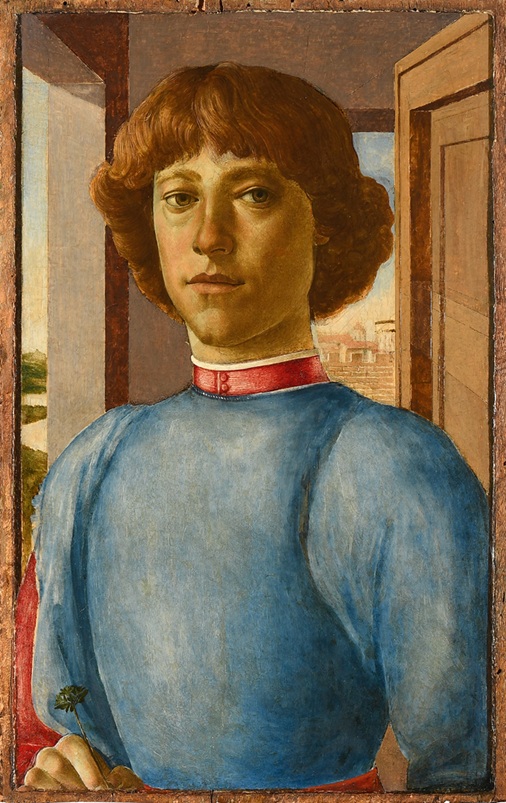
A painting estimated at around €4,500-6,500 that then sells at the hammer for almost €6 million. It sounds like a beginner’s valuation error, yet that is exactly what happened with Portrait of a Young Man, offered as a work in the style of Sandro Botticelli. The auction house expressly did not attribute it to the Florentine Renaissance master. The bidders in the room clearly saw things differently.
A painting attributed to the studio of Luis de Morales fetched €910,000 in 2021 against an estimate of €10,000. A year later, a Moses catalogued as the work of a follower of Guido Reni made €590,000 in Paris, having been estimated at just €5,000-6,000. These prices suggest that buyers judged the paintings quite differently from the auction houses offering them.
The question is whether such low estimates stem from caution and uncertainty, or whether they have also acquired a commercial purpose.
A low estimate does not always mean a low valuation
Anyone who regularly browses the catalogues of smaller and mid-sized auction houses will recognise the situation. A painting looks convincing and may even bear a striking resemblance to works by a major artist. Yet it carries a modest estimate, accompanied by a cautious description such as attributed to, studio of or follower of. For a dealer or collector, this is precisely the kind of lot that deserves a closer look.
A qualified attribution does not necessarily mean that the painting was actually made by a follower. It means the auction house lacks sufficient certainty to publish a firmer attribution. In the Old Master market, the difference in value between a studio work and a painting by the master’s own hand can run into hundreds of thousands, or even millions, of euros.
At the same time, a low estimate has obvious commercial appeal. A low estimate can attract greater interest and set bidders against one another. An estimate is therefore not merely a neutral prediction of the sale price; it is also part of how a lot is presented to the market.
A Botticelli in Zurich? €5.8 million for the possibility
The portrait offered by Schuler auction house in June 2019 depicts a young man with medium-length brown hair, dressed in a blue garment with a red collar. The panel has unmistakable characteristics of late 15th-century Florentine portraiture. Its clear contours, the modelling of the face and the combination of figure and architecture are consistent with the visual language Botticelli also employed.
The painting also had an intriguing art-historical pedigree. Wilhelm von Bode, the influential German museum director, published it in 1924 as an autograph work by Botticelli. According to the technical examination, some later alterations may have been made to lend credibility to a particular attribution.[1] The cautious cataloguing was therefore entirely understandable.
Yet the final price of €5.8 million shows that some bidders were prepared to take a substantial risk despite those concerns. They were not simply buying a Florentine portrait by an unknown painter. The level of bidding suggests they had a far more important attribution in mind. This was not the sudden discovery of an unknown Botticelli. The market was responding to a long-standing attribution question that remains unresolved.
Luis de Morales: when the connoisseurs get it right
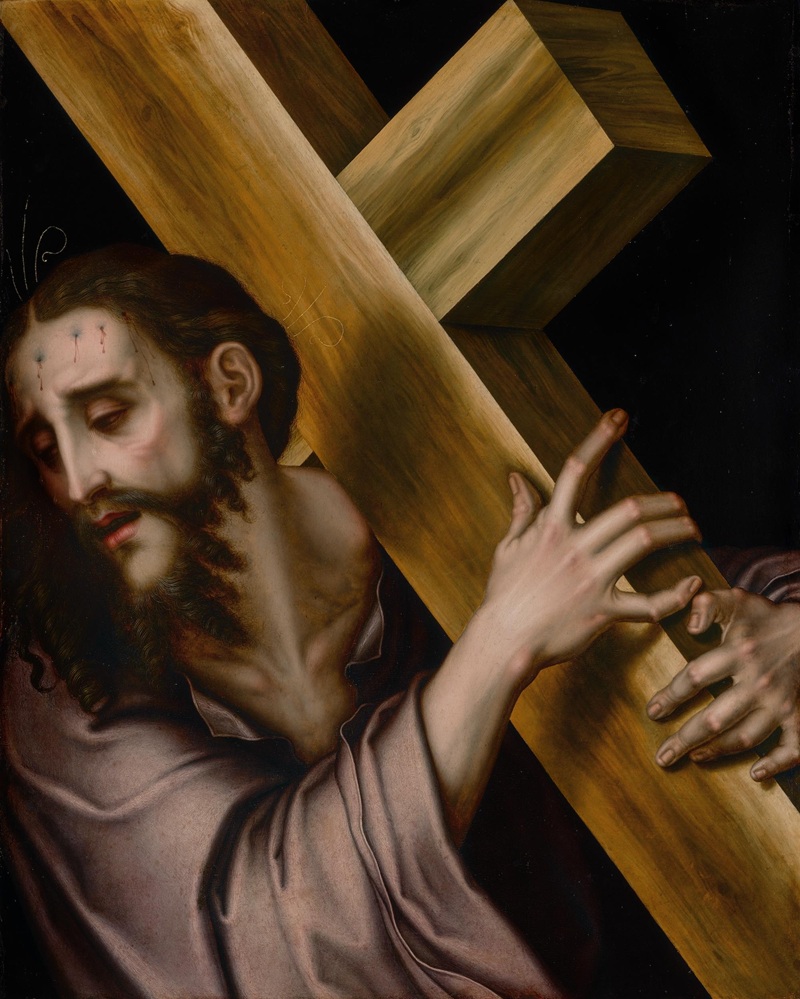
A good example of a sleeper that eventually found its way into a museum is Christ Carrying the Cross by Luis de Morales (c. 1510-1586). On 14 July 2021, the painting appeared at Nagel Auktionen in Stuttgart with an estimate of €10,000. The work was cautiously linked to Morales and his studio.
Bidding reached €910,000.[2] The painting shows Christ half-length, carrying the cross on his shoulder. His figure emerges from an almost black background. His hands grip the wooden beam, while traces of blood on his forehead and tears on his face emphasise his physical and spiritual suffering.
The subject fits well within the religious painting for which Morales became known in the 16th century. His work was intended for intense, personal devotion. Christ is isolated, with no narrative setting to distract the viewer. The emotional force must come entirely from the image itself.
The provenance is equally interesting. During the 19th century, the painting was held in important collections and was exhibited at the Louvre. It later belonged to John Charles Robinson, a prominent British art historian and museum official. After an auction in Berlin in 1914, it disappeared from public view for many years.[3]
The painting eventually reached the J. Paul Getty Museum in Los Angeles through an art dealer. In 2025, the museum presented it as an autograph painting by Morales. In this case, the buyer paid for a work that he evidently suspected had been catalogued in a way that failed to do justice to its quality and authorship.
A Moses that already pointed to Guercino in the catalogue
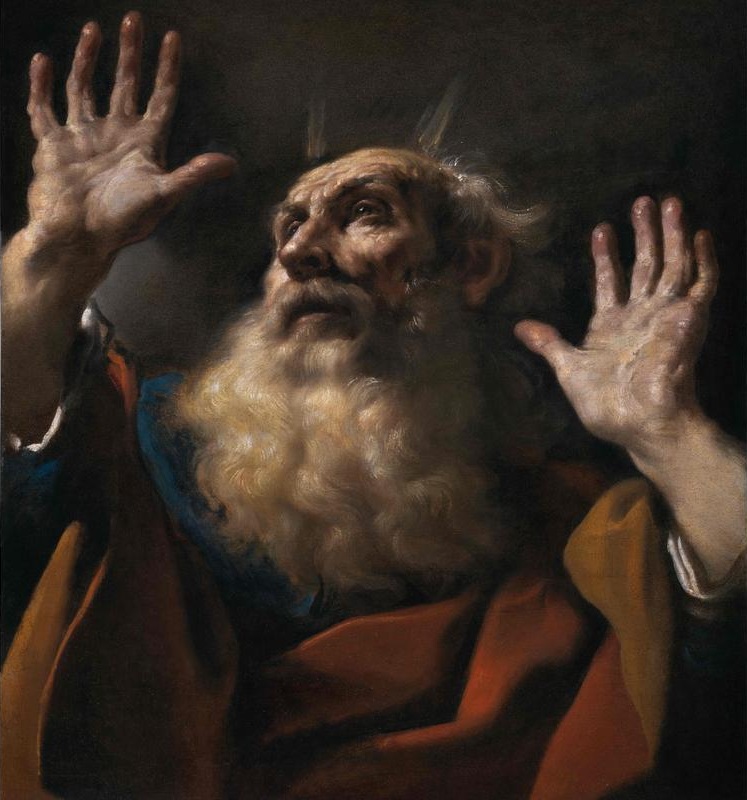
Another intriguing case is a painting that came under the hammer at Chayette & Cheval in Paris on 25 November 2022. The lot was catalogued as a work of the 17th-century Bolognese school, by a follower of Guido Reni. It depicts the biblical prophet with his hands raised and his gaze turned heavenwards. The estimate was just €5,000-6,000.
The auction house explicitly stated that an attribution to Giovanni Francesco Barbieri, better known as Guercino (1591-1666), had also been considered. It also referred to a copy of the same composition, thought to have been painted by Guercino’s pupil Benedetto Zalone.[4] In other words, the auction house raised the possibility that the painting was by Guercino, without attaching an estimate to match.
That is precisely the kind of situation in which an auction becomes attractive to specialist art dealers. Bidding ended at €590,000. After the purchase, the painting was restored and examined further by the dealer. The attribution to Guercino subsequently gained support from, among others, Keith Christiansen, former chairman of European Paintings at the Metropolitan Museum of Art, and a former curator of Italian painting at the National Gallery in London.
The auction house had not concealed the possible Guercino attribution. Yet it chose an estimate much more in keeping with an anonymous follower of Guido Reni. The painting thus attracted precisely those dealers with the expertise and financial resources to challenge the cautious cataloguing.
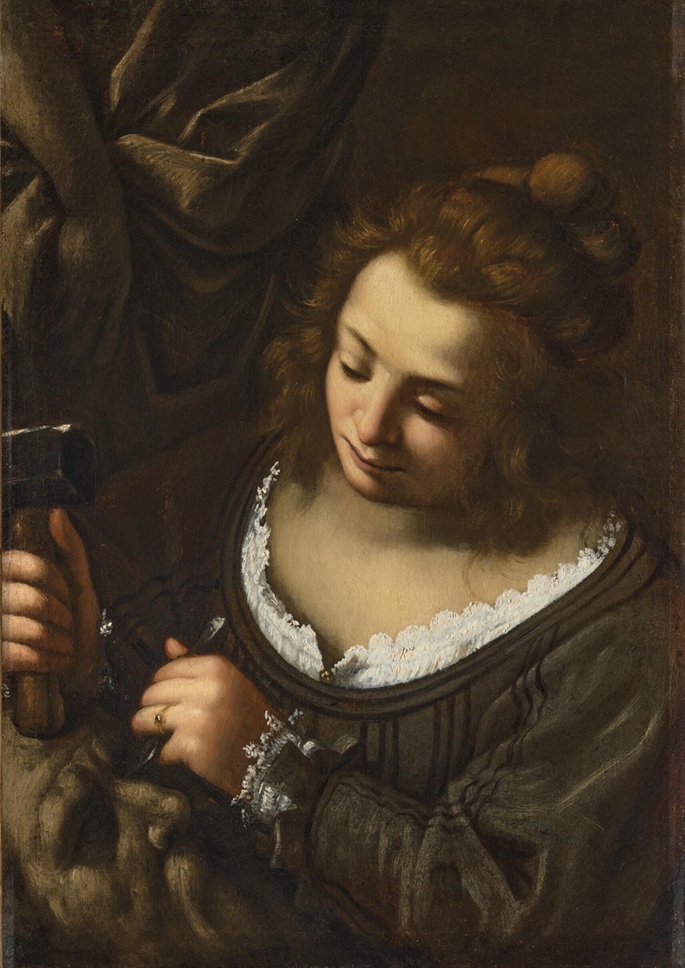
Artemisia Gentileschi: the same painting, a different market
A similar shift in attribution occurred with Allegory of Sculpture, now attributed to Artemisia Gentileschi (1593-after 1654). The painting appeared at Bruun Rasmussen in Copenhagen on 20 September 2022, catalogued as attributed to Francesco Cairo. Its estimate was approximately €4,000-6,700.
Less than a year later, the same canvas was offered at Christie’s in London as an autograph work by Artemisia Gentileschi. Its estimate had risen to approximately £300,000-400,000. On 6 July 2023, it realised around €2.16 million, including buyer’s premium.[5] Several experts supported the attribution. A painting initially given a cautious attribution to a 17th-century Italian artist had entered the top end of the international market for works by one of the Baroque period’s best-known female painters.
Why would auction houses set estimates so low?
These four examples raise an interesting question. Why do auction houses set estimates of only a few thousand euros when a painting evidently offers enough clues to attract the attention of international specialists? One possible explanation is liability.
Attributing a painting to a famous master’s own hand requires substantially stronger evidence than describing it as studio of or follower of. An auction house that lacks sufficient certainty may decide against implying any far-reaching guarantee of authorship. A second explanation is commercial. An attractive estimate puts a lot within reach of a larger pool of potential buyers.
A painting estimated at €5,000 is likely to be followed by a different group of people than one starting at €500,000. When several dealers believe they have spotted an important discovery, a bidding battle can follow in which the original estimate barely matters anymore.
An exceptionally low estimate may itself attract more attention. There is a psychological element for dealers, too. The chance of discovering a sleeper is an important part of the trade. Anyone convinced they have recognised a painting that others have overlooked may be willing to bid far more aggressively.
In most cases, the leading buyers could never have acquired the painting for just a few thousand euros. Other specialists had also recognised the possibility of a stronger attribution. The final price was therefore determined not by the cautious cataloguing, but by the willingness of several parties to bid on a more important authorship.

Is this a new development?
This brings us to the question of whether regional auction houses are deliberately setting low estimates more often. For every spectacular sleeper, there may be paintings whose proposed attribution is never confirmed, or whose appeal fades on closer examination. Those cases attract far less attention.
A painting offered somewhere in the world with a modest estimate can, within days, attract the attention of specialist dealers, researchers and collectors from several countries. Increasingly, the catalogue is only the starting point for further investigation.
Anyone bidding €500,000 on a painting estimated at €5,000 is buying no guaranteed masterpiece. They are buying a painting in the expectation that a stronger attribution may ultimately be convincingly established. Sometimes that judgement proves sound, as with the works by Morales and Guercino. In other cases, the debate may continue for years.
Do you have a particular interest in this artist or subject?
Do you own a painting by this artist, have you come across a comparable work, or do you have information that might be relevant to further research? We welcome contact from collectors, art dealers and researchers with an interest in this artist or related subjects.
We regularly research paintings appearing on the art market, exploring questions of attribution, quality, provenance and previous sales. If you have a question about a particular work or would like to share information with us, please feel free to get in touch at info@antonello.art.
Notes and sources
[1] Schuler Auktionen, Zurich, 28 June 2019, lot 3200, Portrait of a Young Man, offered as “Botticelli, Sandro, in der Art”. Estimate CHF 5,000-7,000, hammer price CHF 6,400,000.
[2] Nagel Auktionen, Stuttgart, 14 July 2021, lot 381, Christ Carrying the Cross. Estimate €10,000, hammer price €910,000.
[3] J. Paul Getty Museum, collection catalogue, Luis de Morales, Christ Carrying the Cross, c. 1565, accession number 2023.98.
[4] Chayette & Cheval, Paris, sale Vente thématique: Bijoux, Tableaux, Arts d’Asie et d’Afrique, Meubles et Objets d’Art, 25 November 2022, lot 42, Moses. Estimate €5,000-6,000, hammer price €590,000.
[5] Bruun Rasmussen, Copenhagen, Fine Art and Antiques, sale 909, 20 September 2022, lot 55, Allegory of Sculpture, attributed to Francesco Cairo. Estimate DKK 30,000-50,000. Christie’s, London, Old Masters Part I, 6 July 2023, lot 28, Artemisia Gentileschi, Allegory of Sculpture, estimate £300,000-400,000, price realised £1,855,000 including buyer’s premium.