The Old Master market is becoming increasingly selective. Exceptional, fresh-to-market paintings can draw bidders far beyond their estimates, while doubts over price, condition or attribution are punished severely. Scarcity is playing an increasingly important role. The supply of top-quality works remains limited, while demand for them can be intense.
The number of European Old Masters sold declined last year, even as turnover rose sharply. At the same time, the number of works selling for more than $1 million jumped from 37 to 80.[1] More money, but fewer paintings. That, in our view, is where the figures become interesting.
The numbers do not point to a market rising across the board. Instead, they suggest a market increasingly determined by what happens to become available. And when exceptional works do appear, bidders are not holding back.
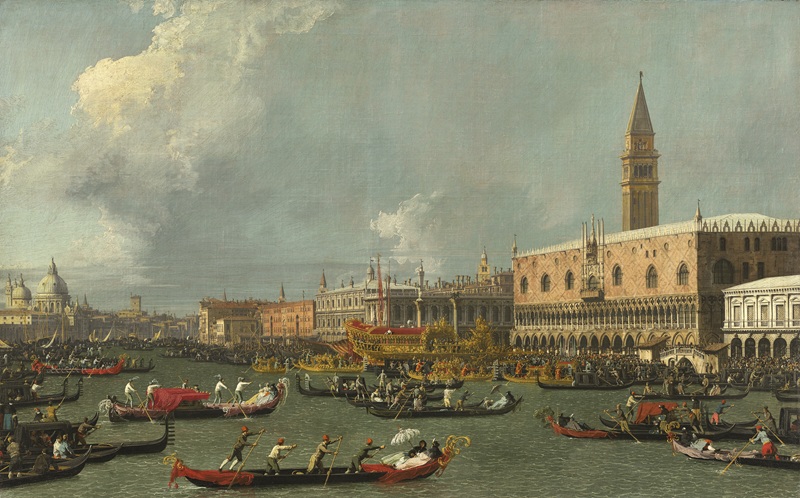
A Canaletto with few real alternatives
On 1 July 2025, Christie’s in London sold Canaletto’s Venice, the Return of the Bucintoro on Ascension Day for €37.2 million ($43.9 million), including buyer’s premium. It set a new auction record for Canaletto.[2] More interesting is why bidders were prepared to go so far for this particular painting.
The canvas dates from the early 1730s, one of the strongest periods of Canaletto’s Venetian production. By 1736 it was already hanging in Sir Robert Walpole’s collection in Downing Street. Over the following three centuries, it passed through only a small number of owners.
It is exactly the kind of combination that can wake up the Old Master market: a prime period, a recognisable subject, historic provenance, little market exposure and an important position within the artist’s oeuvre. A collector who lets such a work pass cannot know when something comparable will appear again. The problem is that Canalettos of this quality, with this history, are exceedingly difficult to replace.
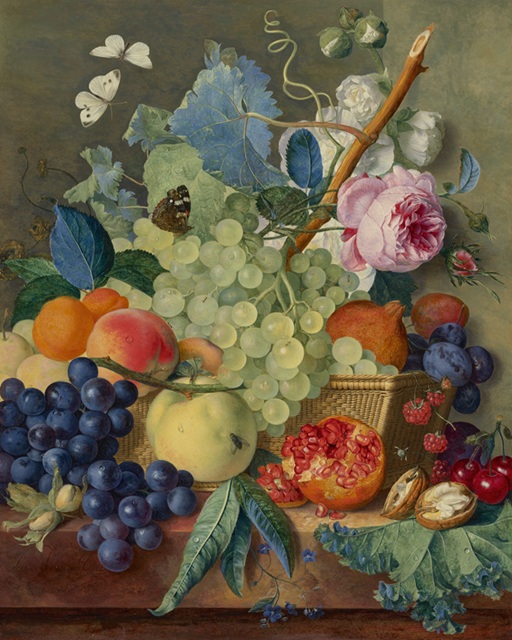
Two Van Huysums and two bidding battles
Another example came in the form of two still lifes by Jan van Huysum (1682-1749), offered at Christie’s London on 30 June 2026. Fruit and Flowers in a Wicker Basket carried an estimate of around €3.5 million and sold for €7.6 million. The signed and 1734-dated Flowers in a Terracotta Vase was likewise estimated at around €3.5 million and finished at €6.4 million.[3]
Van Huysum was already exceptionally expensive during his own lifetime. His flower and fruit pieces combined botanical precision with an almost improbable command of the brush. Light passes through leaves and petals, while insects emerge between the foliage.
Both panels also came with substantial collecting histories. Fruit and Flowers had once belonged to the Duchess of Berry. The other work passed through the collection of King William II of the Netherlands. In the nineteenth century, Baron Lionel Nathan de Rothschild reunited the paintings as pendants.
When they returned to the market in 2026, two works appeared that had not been publicly offered for more than twenty years and that rank among the more ambitious examples within Van Huysum’s oeuvre. This is precisely the kind of material for which the market is currently prepared to move.
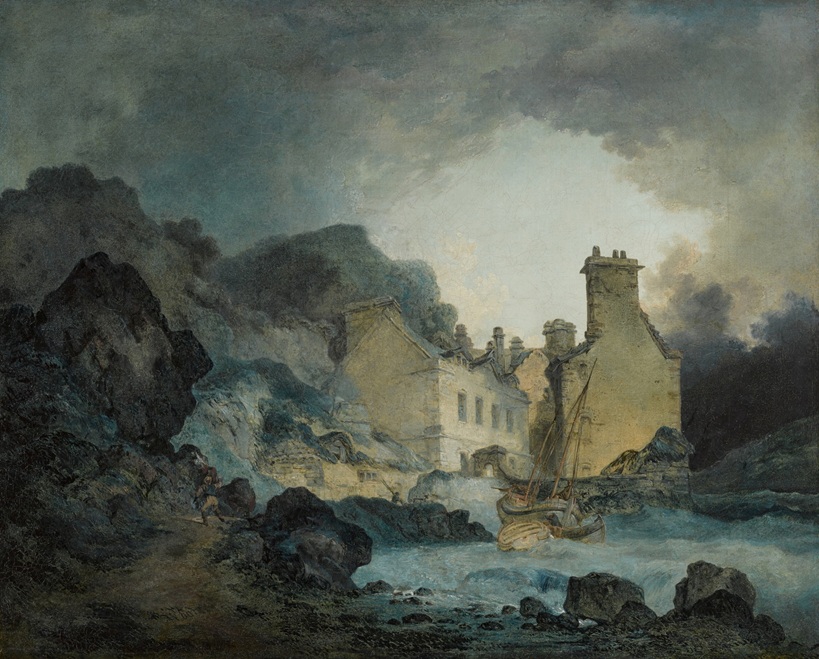
The market also pays for discoveries
J.M.W. Turner’s The Rising Squall, Hot Wells, from St Vincent’s Rock, Bristol reveals another side of the market. In 2024, the painting was sold at Dreweatts as a work by a follower of Julius Caesar Ibbetson. Including fees, the price amounted to only a few hundred euros.
After cleaning and further research, the cataloguing changed completely. The painting proved to be Turner’s earliest known oil painting to have been publicly exhibited, a work shown at the Royal Academy in 1793, when Turner was seventeen years old. Sotheby’s estimated it in July 2025 at approximately €230,000–350,000. The hammer fell at £1.5 million with buyer’s premium.[4]
Attribution, provenance, exhibition history and scholarly consensus are fundamental components of value in this market. A painting that moves from “follower of” to a documented early Turner is suddenly operating in an entirely different market. Bidders do not pay simply for limited supply, they pay for scarce material in which they have confidence.
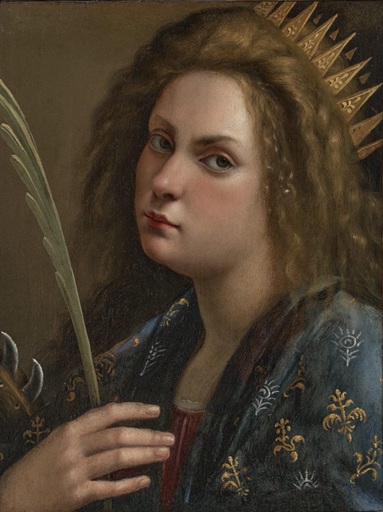
Gentileschi, coveted by museums and the market alike
With Artemisia Gentileschi (1593-after 1654), that scarcity becomes particularly visible. In February 2026, Christie’s New York sold her small Self-Portrait as Saint Catherine of Alexandria for approximately €4.8 million.[5] It is considered one of only five known literal self-portraits by Gentileschi. Three are now held in museum collections.
Here, scarcity takes on a more tangible meaning. Of five known works, only two remain outside museum collections. At the same time, Gentileschi has moved firmly into the art-historical canon in recent years, with her importance increasingly recognised. In 2018, the National Gallery acquired another Self Portrait as Saint Catherine of Alexandria.[5]
But the market can just as easily walk away
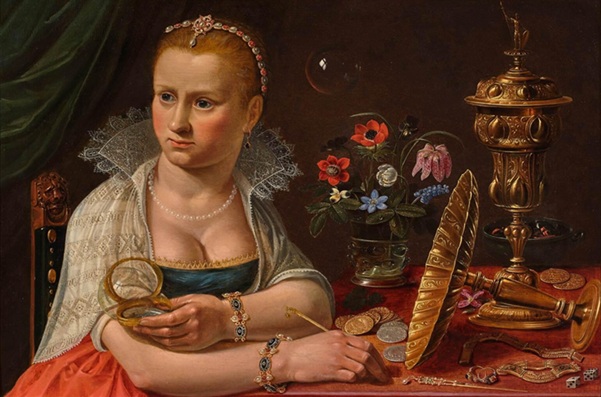
On the same Sotheby’s evening in which the Turner climbed to approximately €2.2 million, a work by Clara Peeters failed to sell. A Presumed Self-Portrait with a Lavish Display of Objects in a Vanitas Still Life and a Still Life of Flowers in a Glass Vase carried an estimate of approximately €1.4–2.1 million.[6] Peeters is one of the few known female professional painters working in early seventeenth-century Antwerp, and only a few dozen works are known from her oeuvre. Was the estimate simply too ambitious?
Not more expensive, but a more difficult market
A bought-in painting is not necessarily a bad painting. But a pattern is becoming visible. The Old Master market appears to be getting tougher. When a painting offers a convincing combination of quality, rarity, art-historical significance, condition, provenance and freshness to the market, competition can escalate quickly. Canaletto and Van Huysum demonstrate this at the top end. Gentileschi shows what can happen when limited supply coincides with institutional reappraisal. Turner shows how much weight new scholarship can carry.
On the other hand, weaknesses become immediately apparent once an estimate turns ambitious. A questionable identification, complicated condition, a less convincing position within the oeuvre or simply a price set too high can be enough. Bidders will walk away.
Scarcity undoubtedly plays a role. Many of the most important historical paintings have been held in museums or private collections for generations. Once an exceptional work enters a museum collection, it effectively disappears from the market. And no new Rembrandts, Van Huysums or Canalettos are being made.
Do you have a particular interest in this artist or in this subject?
Do you follow this artist, or have you come across a work you would like to know more about? We regularly research works appearing on the market and are always happy to exchange views on quality, provenance, art-historical context and previous auction results. You can contact us directly via info@antonello.art.
Notes and sources
[1] Clare McAndrew, Arts Economics, The Art Basel and UBS Art Market Report 2026.
[2] Christie’s, Old Masters Evening Sale, London, 1 July 2025, Giovanni Antonio Canal, called Canaletto, Venice, the Return of the Bucintoro on Ascension Day, sold for £32,000,000 including buyer’s premium.
[3] Christie’s, Old Masters Evening Sale, London, 30 June 2026, Jan van Huysum, Fruit and Flowers in a Wicker Basket and Flowers in a Terracotta Vase, sold for £6,500,000 and £5,550,000 respectively, including buyer’s premium.
[4] Sotheby’s, Old Master and 19th Century Paintings Evening Auction, London, 2 July 2025, lot 28, J.M.W. Turner, The Rising Squall, Hot Wells, from St Vincent’s Rock, Bristol, estimate £200,000-300,000, realised £1.5 million hammer.
[5] Christie’s, Old Masters, New York, 4 February 2026, Artemisia Gentileschi, Self-Portrait as Saint Catherine of Alexandria, sold for $5,700,000 including buyer’s premium.
[6] Sotheby’s, Old Master and 19th Century Paintings Evening Auction, London, 2 July 2025, Clara Peeters, A Presumed Self-Portrait with a Lavish Display of Objects in a Vanitas Still Life and a Still Life of Flowers in a Glass Vase, estimate £1.2-1.8 million, bought in.


