On 3 December, a painting attributed to Luis de Morales will go under the hammer at an Italian auction house. The estimate is €8,000-12,000. It bears a striking visual resemblance to an Ecce Homo that fetched £113,000 at Sotheby’s four years ago. But is it really an autograph version, or a workshop painting?
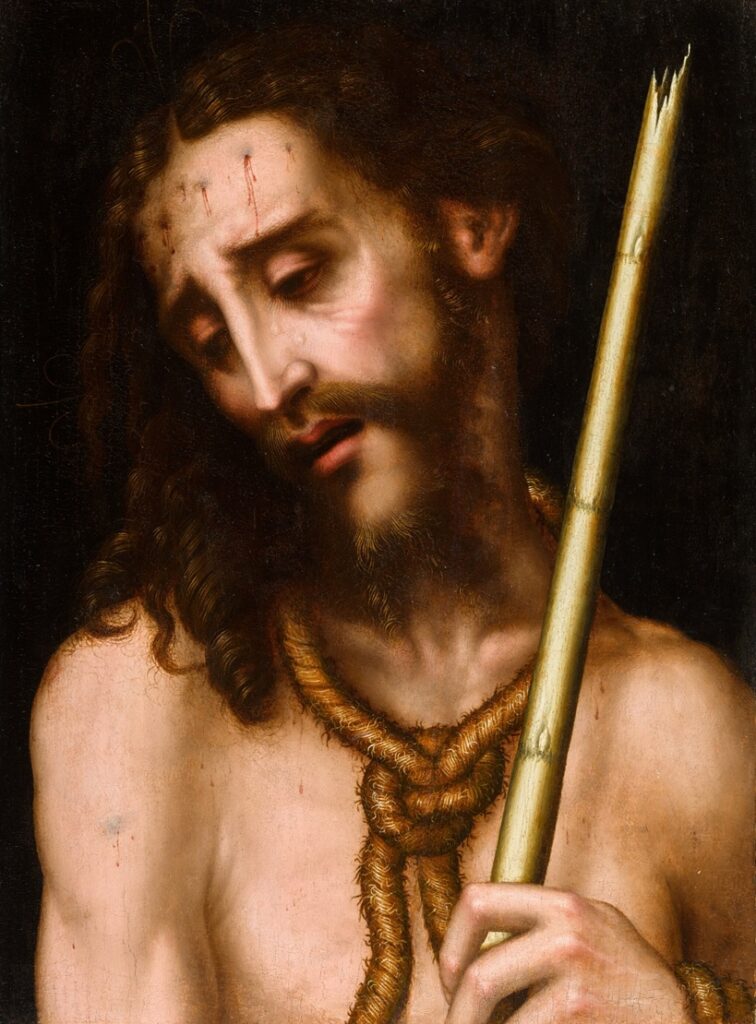
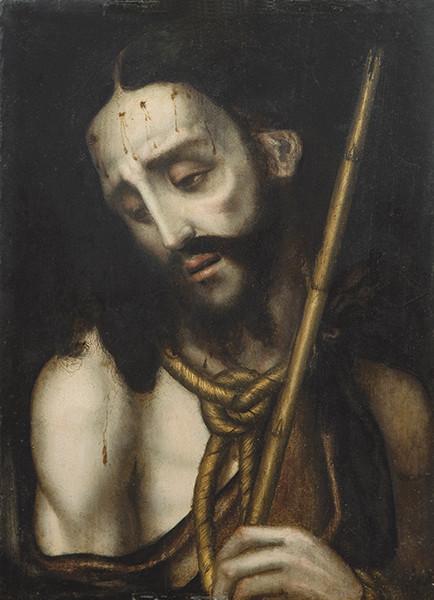
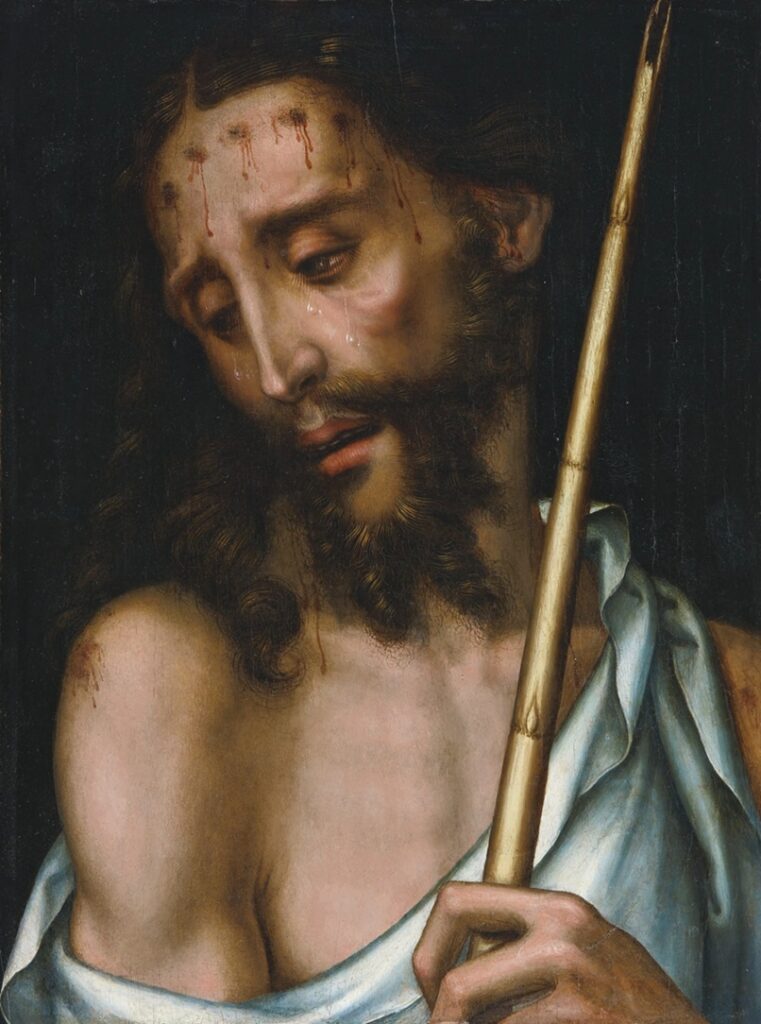
Christ is shown from the waist up, bare-chested, his gaze cast down. A heavy cord encircles his neck, and in one hand he holds a reed sceptre, an object given to him during the Mocking of Christ. The background of this small panel, measuring 36 by 26.5 centimetres, is entirely black. In December 2022, a comparable painting by Luis de Morales appeared at auction in London. That Ecce Homo is almost identical in composition and size.
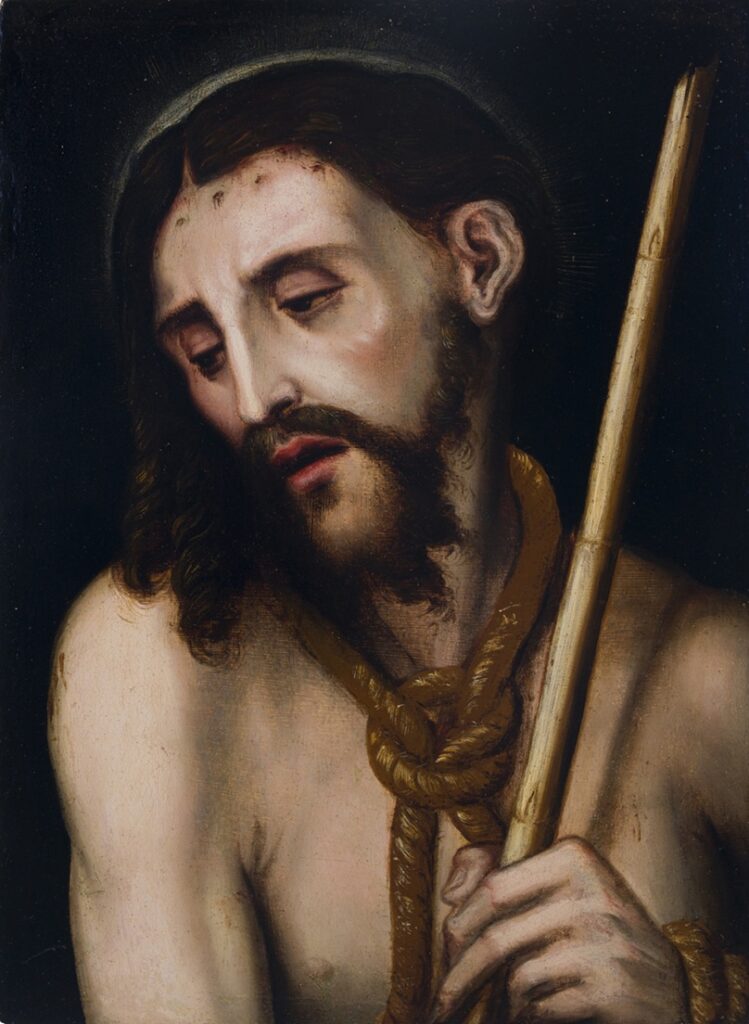
It too features the bare torso, downcast eyes, dark background, cord and reed sceptre. Sotheby’s catalogued it without the qualification attributed to, and it fetched £113,000 against an estimate of £100,000-150,000. Four years later, a painting with almost the same composition and dimensions is coming to auction, but with a far more cautious estimate of €8,000-12,000. The question is why the market accepts one Ecce Homo as a fully fledged Morales, while the other remains, for now, in the category of attributions.[1][2]
A familiar image by a sought-after painter
Luis de Morales (1510-1586) ranks among the leading painters of the Spanish Renaissance and became particularly well known for his small devotional panels. The Ecce Homo was one of his most characteristic subjects. Morales could distil the great events of the Passion into a small, emotionally charged image. The other figures in the biblical narrative, the soldiers and the crowd, are often absent.
The viewer is confronted directly with the suffering face of Christ. This was painting intended for private meditation. The combination of refined execution, emotional accessibility and small scale made such panels attractive to religious institutions and private patrons alike.
The major exhibition El Divino Morales, held at the Museo del Prado in 2015, brought these devotional paintings back to the centre of his oeuvre. They are no longer regarded as a secondary output alongside the altarpieces, but as an integral part of his artistic identity. A small Ecce Homo panel is therefore far from marginal in Morales’s oeuvre. It belongs to the very category of painting in which his style is most readily recognisable.[3]
A successful composition, repeated many times
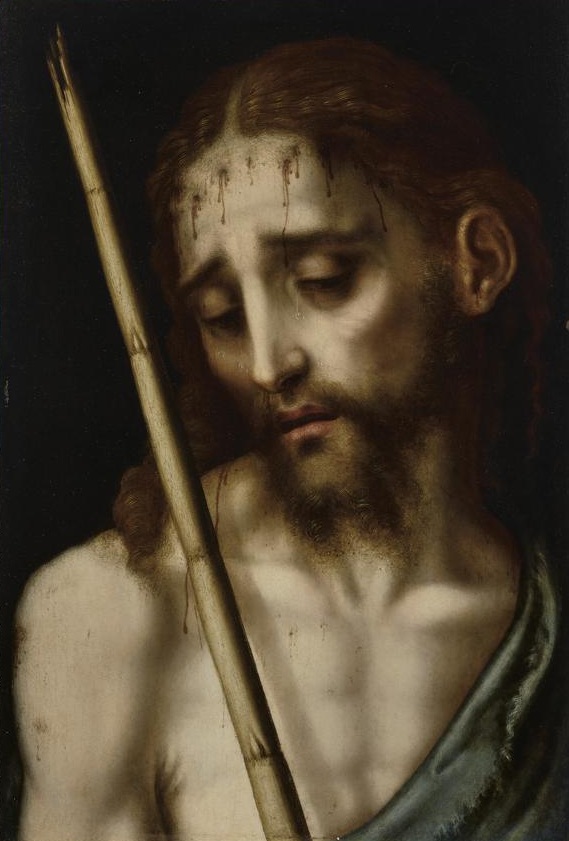
Morales sometimes repeated his own compositions with help from his workshop. Copies and works by followers also proliferated. Small dots have been found in the paint layers of some paintings, indicating that a composition was transferred to the panel using a perforated pattern. This allowed the same image to be used again, both by Morales himself and by members of his workshop. It explains why two paintings may depict an almost identical Christ without necessarily having been executed by the same hand, that of the master. A close correspondence in the placement of the head, shoulders, hands and attributes therefore proves very little on its own.[4]
The painting’s quality is most apparent in the face
The modelling of the face deserves particular attention. Light falls on the forehead, nose and cheeks. The eyes are half-closed and the mouth slightly open. The transitions between the illuminated skin and shaded areas are handled with a degree of softness. This recalls the sfumato Morales adopted from Italian models, with its gentle tonal transitions.
The eyebrows, beard and hair are rendered in considerable detail. This combination of softness and precision is characteristic of the painter, and it is visible here in these details. The small traces of blood on the forehead are applied with restraint. The crown of thorns is absent, although the figure still bears the wounds it inflicted, an iconographic choice also encountered in other versions associated with Morales.
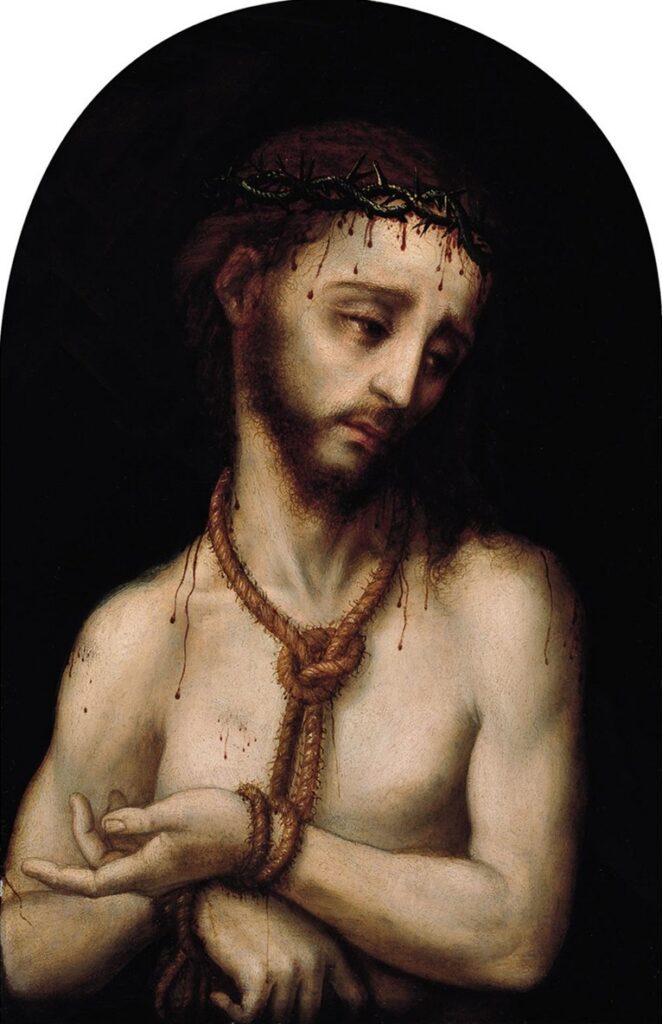
The hand appears less refined than the modelling of the face. The fingers are clearly delineated but lack the subtle transitions seen in the features. The cord receives a similarly emphatic treatment. These differences could reflect later restorations or collaboration within a workshop. Morales’s popularity gave rise to numerous workshop copies and works by followers. In any event, the painting is sufficiently accomplished to warrant comparison with recognised works in his oeuvre.
The same dimensions, but the same composition within the oeuvre?
The closest comparison remains the Ecce Homo sold by Sotheby’s in 2022. Both paintings show Christ without a crown of thorns, with a cord around his neck, a reed sceptre and a head turned markedly to the left. In the Sotheby’s version, the transition between head and neck looks different. The rendering of the beard and the shape of the hand also differ. The cord is not depicted in precisely the same way either. These are the differences on which attention should be focused.
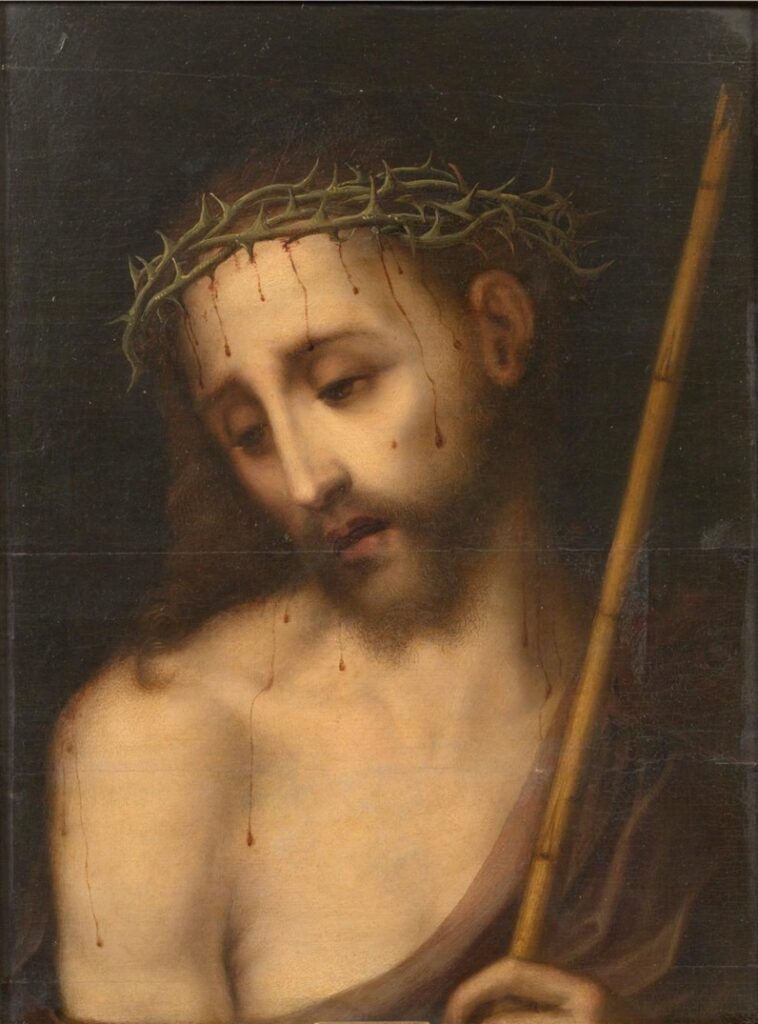
Another point of comparison when considering whether Morales painted the panel himself is a small Ecce Homo dating from around 1565 in the collection of Fundación Banco Santander. It too shows Christ with downcast eyes, a cord around his neck and a dark background. Here, however, Christ wears a crown of thorns and the reed sceptre is absent.[5]
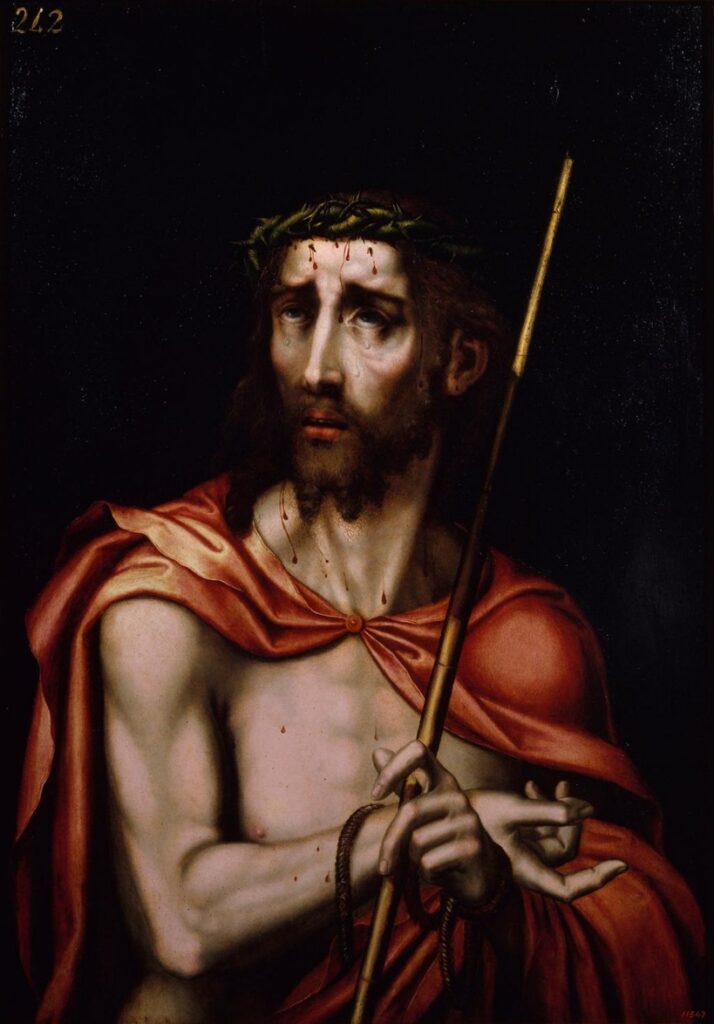
Another relevant version is held by the Gemäldegalerie Alte Meister in Dresden. This Ecce Homo is dated to around 1560-1570. It shows that Morales was indeed producing small Ecce Homo panels of this type in the 1560s. Comparison with authenticated paintings can therefore help us establish the artistic context of the work coming to auction.[6]
A market marked by wide differences in price
Morales’s auction history shows how differently the market responds to quality, condition, provenance and confidence in an attribution. In December 2013, Sotheby’s sold another small-panel Ecce Homo. The work had undergone restoration in which later additions at the top and bottom had been removed. Its attribution was also endorsed by a specialist. The painting fetched £170,000.[7]
A convincing autograph Morales can clearly attract a substantial collector following. In September 2023, an auction house sold an Ecce Homo by Morales for €23,000. The painting came from a private collection in Madrid and was said to have been acquired in Spain by the owners’ family. According to the catalogue, it had been examined by a specialist who considered it entirely autograph, with no workshop participation.[8]
At another auction in Barcelona in May 2020, a further Ecce Homo by Morales achieved €115,000. And in May 2025, Christie’s in New York sold an Ecce Homo by Morales measuring 49.2 by 33.3 centimetres. The work had a documented provenance and exhibition history and had been discussed in the literature. Against an estimate of $200,000-300,000, it realised $176,000 including buyer’s premium.[9]
Morales has an established collector market, but it is far from straightforward. The estimate for the painting now coming to auction is low compared with the international sales discussed here, though not unreasonable for a work whose autograph status has yet to be properly established.
An interesting addition, but not yet a discovery?
The appeal of this Ecce Homo does not lie in the rarity of its subject. Morales made this image famous, and his workshop and followers helped disseminate it further. The painting may therefore be a fine workshop version based on a successful model devised by the master. The estimate of €8,000-12,000 suggests that the auction house may still be grappling with that question too.
Do you have a particular interest in this artist or subject?
Do you own a painting by this artist, have you come across a comparable work, or do you have information that might be relevant to further research? We welcome contact from collectors, art dealers and researchers with an interest in this artist or related subjects.
We regularly research paintings appearing on the art market, exploring questions of attribution, quality, provenance and previous sales. If you have a question about a particular work or would like to share information with us, please feel free to get in touch at info@antonello.art.
Notes and sources
[1] Lucas Aste, Palazzo Duodo – Dipinti Antichi e del XIX Secolo, 3 December 2026, lot 40, Luis de Morales (attributed to), Ecce Homo, oil on panel, 36.2 × 26.5 cm. Estimate €8,000-12,000.
[2] Sotheby’s, Old Masters Evening Auction, London, 7 December 2022, lot 5, Luis de Morales, Ecce Homo, oil on softwood panel, 36 × 26.8 cm. Estimate £100,000-150,000. Result £113,400 including buyer’s premium.
[3] Museo Nacional del Prado, El Divino Morales, exhibition held in 2015-2016.
[4] Museu Nacional d’Art de Catalunya, Barcelona, collection catalogue, Luis de Morales, Ecce Homo, 1570-1580, oil on wood, 82.7 × 57.7 cm, inv. no. 011547-000.
[5] Trinidad de Antonio, Fundación Banco Santander collection catalogue, Ecce Homo, Luis de Morales, c. 1565, oil on panel, approximately 23 × 15 cm.
[6] Staatliche Kunstsammlungen Dresden, Gemäldegalerie Alte Meister, Luis de Morales, Ecce Homo, c. 1560-1570, oil on oak panel, 32.5 × 25 cm.
[7] Sotheby’s, Old Master & British Paintings Evening Sale, London, 4 December 2013, lot 5, Luis de Morales, Ecce Homo, oil on panel, approximately 32.8 × 24.5 cm. Estimate £80,000-120,000, result £170,500 including buyer’s premium.
[8] Subastas Segre, Subasta 158, Madrid, 19 September 2023, lot 70, Luis de Morales, Ecce Homo, oil on panel, 40 × 28.5 cm. Result €23,000.
[9] Christie’s, New York, 21 May 2025, lot 122, Luis de Morales, Ecce Homo, oil on panel, 49.2 × 33.3 cm, estimate $200,000-300,000. Realised $176,400 including buyer’s premium.