Paintings by Herri met de Bles belong to a market in which prices vary considerably. In April 2025, a newly rediscovered landscape sold at Dorotheum for €350,000 against an estimate of €80,000–120,000. A year later, a Calvary panel at the same auction house realised €180,000.
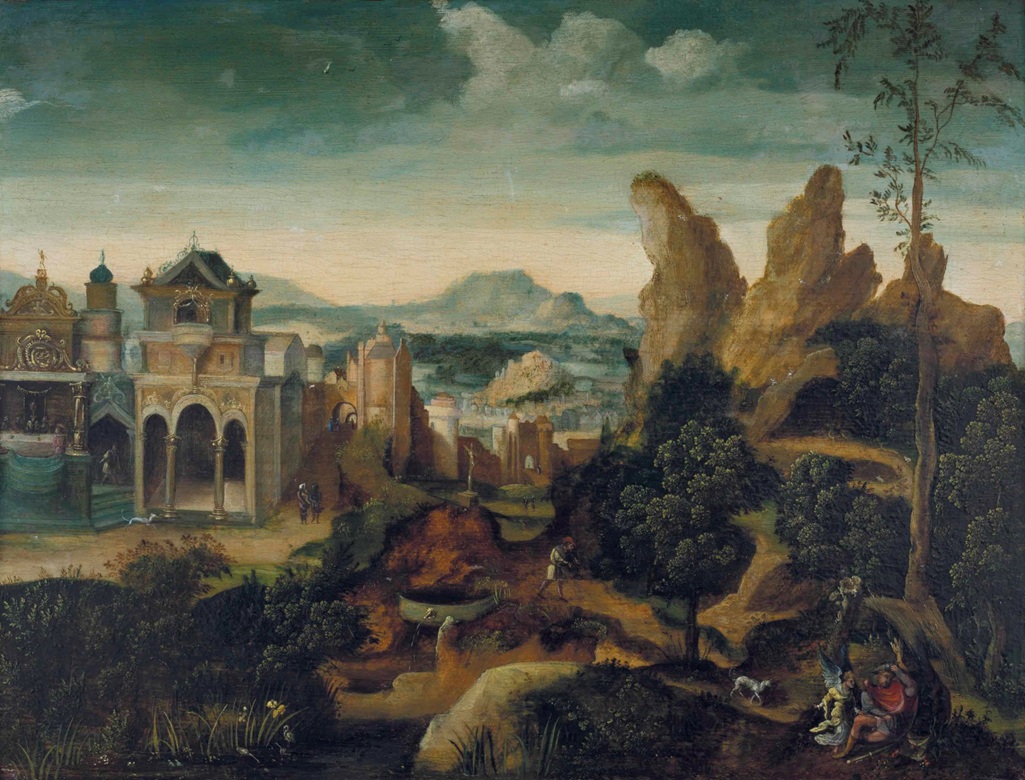
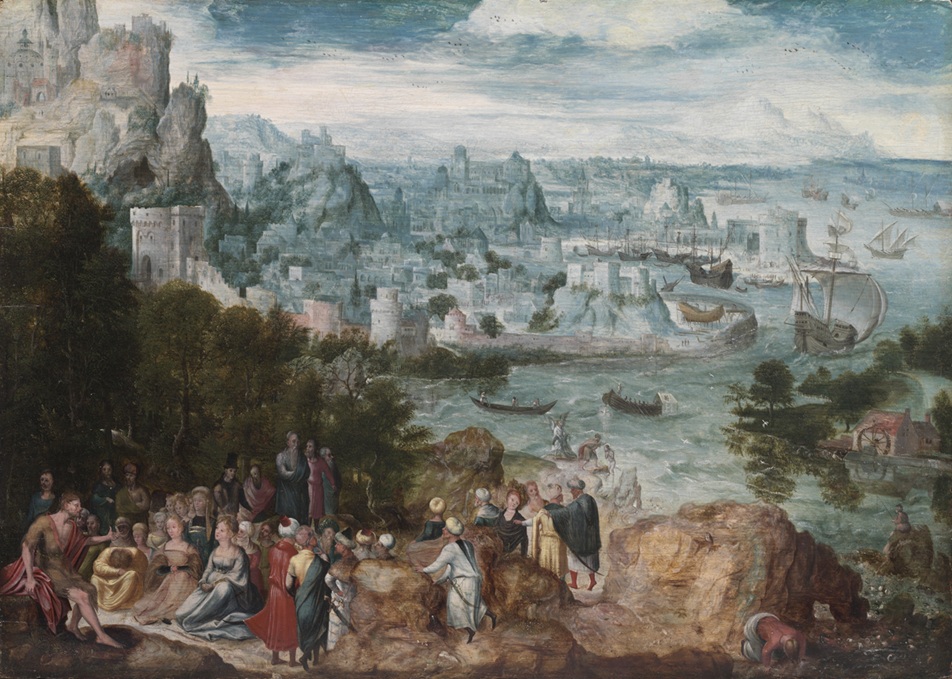
On 29 April 2025, Landscape with the Vision of the Apocalypse of Saint John on Patmos, a panel measuring just 35.5 by 55 centimetres, came up for auction. The work had not previously been published. A Bles specialist confirmed the attribution, and it proved to be an important new addition to the known oeuvre. The estimate was €80,000–120,000. The final price was €350,000.[1]
That result is interesting because the combination of quality, rarity, an appealing composition and the significance attached to the discovery evidently carried considerable weight. Among the known variants of this subject, the painting stood out for its complexity and refinement.[1] This is relevant to the market. With an artist whose compositions can exist in several versions and variants, it is not only the subject that matters, but also the quality of a particular execution within that group.
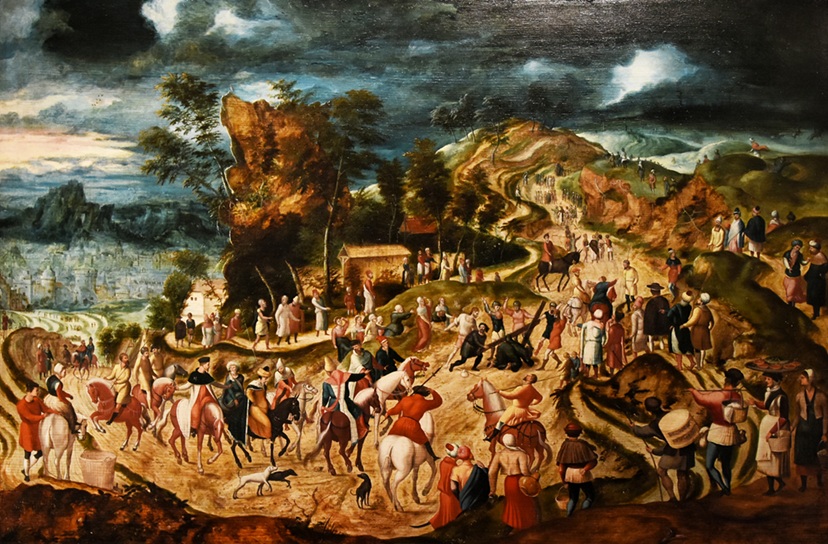
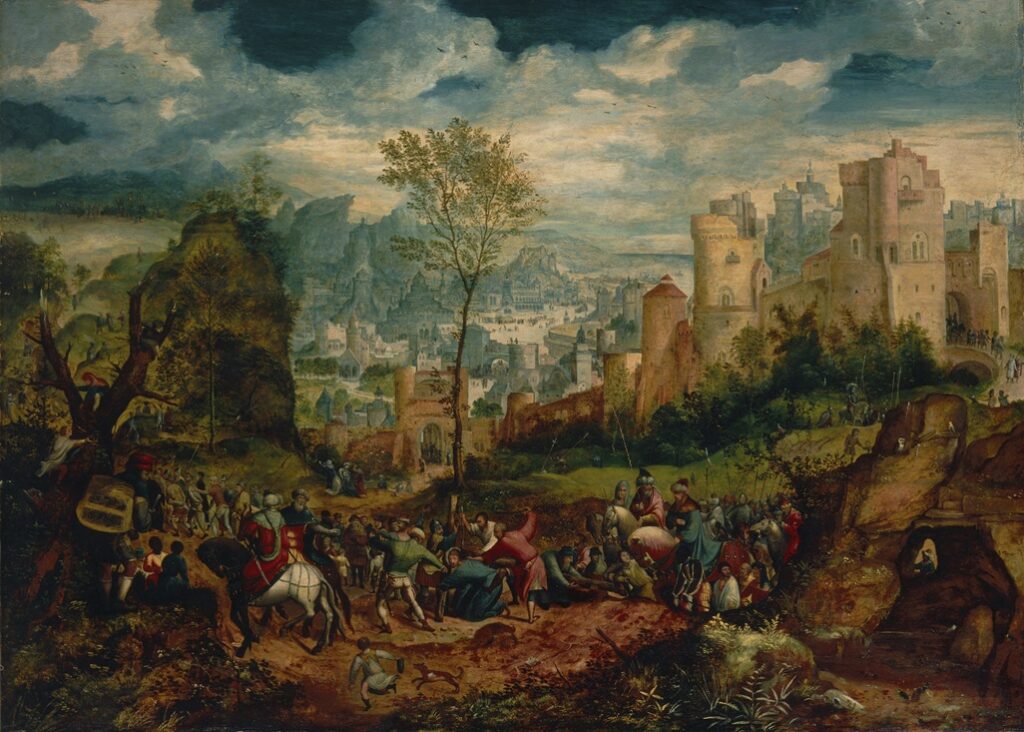
On 28 April 2026, Dorotheum sold Christ on the Road to Calvary, oil on panel, measuring 32 by 44 centimetres. An expert had endorsed the attribution after examining the work, and results from technical analysis were also available. The painting carried an estimate of €180,000–220,000 and realised €180,000 including buyer’s premium.[2]
Specialist endorsement and technical research can reduce uncertainty surrounding a painting, but they do not automatically result in a higher auction price. Subject, rarity, quality, condition, provenance and competition between bidders at the time of sale also remain decisive. More documentation does not therefore automatically mean a higher price, although it can be extremely important in establishing a painting convincingly within the oeuvre.
The owl as a signature is famous, but it is not proof of authenticity
Very little is known about Herri met de Bles. It is now generally accepted that he was the same artist as “Herry de Patenir”, who was registered with the Antwerp Guild of Saint Luke in 1535. A frequently assumed family relationship with Joachim Patinir, however, has never been proven.
This makes it difficult to establish a chronological order within the oeuvre. The large number of works associated with Bles was probably produced in part by workshop assistants and other hands. Straightforward comparisons between paintings are therefore risky.[3]
Connoisseurs often refer to the owl. In Italy, the artist became known as Il Civetta, “the owl”. Karel van Mander related that Bles hid the little bird in his landscapes and that viewers would search for it. The owl does indeed appear in several paintings associated with him. But the motif also occurs in works by other landscape painters. An owl therefore does not in itself make a landscape a Herri met de Bles.
This is also an important distinction from a market perspective. There can be major differences between a work fully attributed to Herri met de Bles, one assigned to his workshop or circle, and a painting that has merely been associated with his name. An old attribution or an owl motif may provide a reason for further research.
The world landscape helps explain the appeal of his finest works
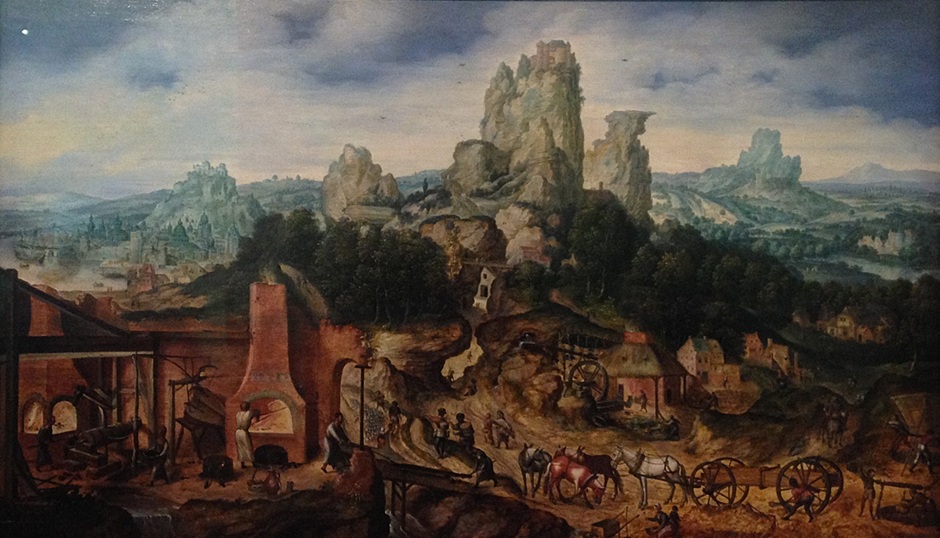
Bles ranks among the most important representatives of the sixteenth-century world landscape: an imaginary panorama in which mountains, rock formations, rivers, towns, forests and distant horizons are combined into a single world viewed from an elevated perspective. Religious events are surprisingly small within these compositions and sometimes appear almost to serve as a pretext for painting a much more expansive landscape.[4]
The eye moves from rock to town, from figure to river, from architecture to a motif that almost disappears into the distance. This makes the strongest works not only visually attractive, but also complex. That complexity is also relevant when different versions of the same subject are compared.
Within the workshop, motifs, rock formations, buildings and groups of figures could be reused. The existence of several related compositions therefore does not mean that every version has the same status. Differences in execution, spatial construction, atmospheric perspective and detail can become particularly important when two apparently similar works are compared side by side.
What types of paintings can be distinguished within the oeuvre?
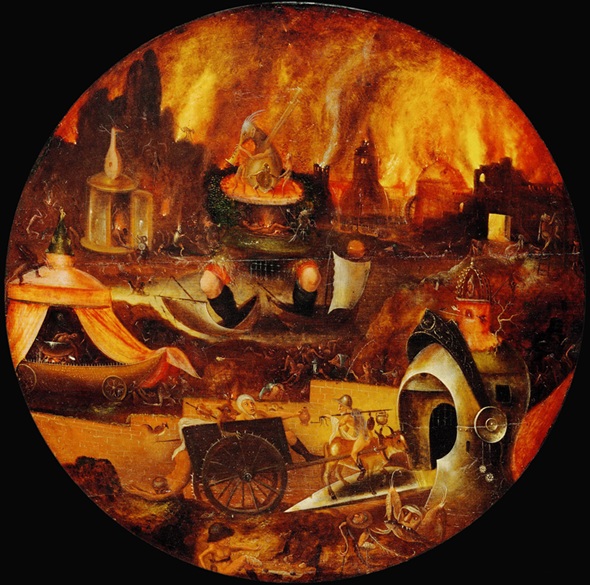
Although almost the entire painted oeuvre of Herri met de Bles is dominated by landscape, several different types of subject can be distinguished within it. The landscape generally remains the principal element, while the biblical, historical or everyday narrative unfolds as a smaller scene within that setting.
An important group consists of religious journey and procession landscapes. The movement of figures through the landscape allowed Bles to connect roads, bridges, towns, rocks and distant horizons. The religious narrative and the landscape reinforce one another: the journey undertaken by the figures simultaneously becomes a journey for the viewer’s eye.
There are also river, coastal and maritime landscapes. River branches, harbours, ships, rocky coastlines and distant sea views structure these paintings and allow for pronounced atmospheric transitions from brown and green foreground tones to cooler blues in the distance.
Water is more than a background element. Rivers and coastlines lead the eye deep into the painting, connect different zones of the composition and reinforce the impression that the viewer is looking out across an immense world. The biblical narrative is incorporated into a world filled with trees, water, animals and minute details. The painting can therefore function almost as a complete world in miniature. The viewer can slowly explore the landscape and continue to discover new scenes.
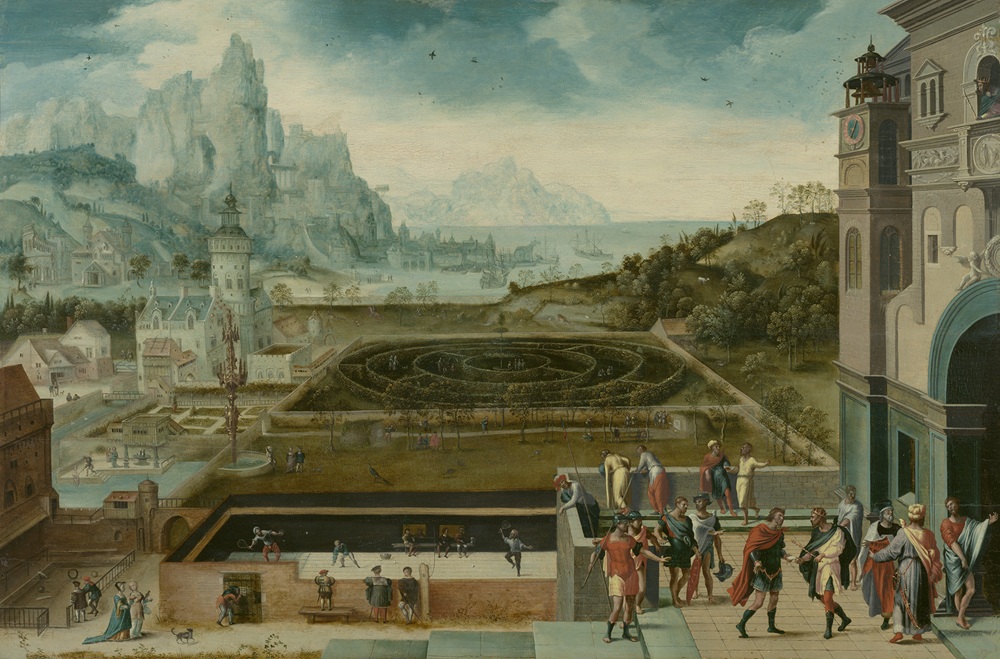
Different again are the landscapes in which labour and human activity take centre stage. Miners, workers, furnaces, tools, waterworks, transport and buildings are incorporated into a large rocky landscape. The subject is unusual because human labour plays a much more substantial role here than merely providing a small biblical motif within the landscape.
This makes such paintings particularly interesting within Bles’ oeuvre. They demonstrate that his landscapes did not offer only religious contemplation. They could also make technology, labour and economic activity visible. Human figures remain small in relation to nature, yet their activities are present throughout the landscape.
A much rarer category consists of historical landscapes. An army, a city and a historical event take the place of the small religious narrative. The format can also distinguish such works from much smaller panels. It is precisely the combination of historical subject matter, scale and narrative complexity that explains why such a painting cannot easily be compared on the market with an ordinary Calvary or river landscape.
Within the religious paintings, there are also different ways in which narrative and landscape relate to one another. Sometimes the viewer must literally search for a small biblical event within an immense setting; in other works the figures and narrative are more clearly present. Not every painting by Bles is simply a landscape populated by small figures.
Account must also be taken of variants and workshop production. Towns, rock formations, trees, animals, harbours and other motifs recur in different compositions. Two paintings can therefore be very similar in overall structure while differing considerably in detail, inventiveness and quality of execution.
For the art market, this last point is particularly important. Within the same type of subject, differences in original composition, execution, quality, provenance, attribution and workshop status can have a major impact.
Technical research can be particularly important in the case of Bles
Because documentary evidence and firmly established dates are so scarce, technical research carries exceptional weight within the oeuvre. Infrared reflectography, for example, can reveal an underdrawing and provide information about how a composition was prepared and altered during the painting process. Such evidence can help distinguish original compositions, copies, followers and workshop practices.
When several versions of a composition exist, information about the underdrawing, the type of wood, pigments and the build-up of the paint layers can help determine how convincingly a work can be placed within the oeuvre.
A sixteenth-century panel, historically appropriate pigments or the presence of an underdrawing do not in themselves prove authorship. Their significance only emerges when technical findings are compared with paintings, underdrawings and working methods that have been convincingly associated with Bles and his workshop on art-historical grounds.
Technical analysis and connoisseurship therefore complement one another. A convincing assessment consists of several layers. What is visible on the surface? What lies beneath it? How was the panel constructed? How does the composition relate to other versions? And what does the documented history of the painting tell us?
Recent auction results show major differences
In April 2017, On the Way to Mount Calvary was sold, an oil-on-panel painting measuring 31 by 47 centimetres. The work had a substantial provenance and had been included in literature by Max Friedländer, among others. The estimate was €20,000–30,000 and the purchase price was €25,000 including buyer’s premium.[5]
Strong paintings had already been capable of achieving several hundred thousand euros or pounds in earlier years. Prices rise considerably further at the upper end of the market. A siege at Thérouanne, with an army led by Charles V encamped below the city was auctioned at Christie’s in 2009. The panel measures no less than 118 by 181 centimetres and sold for more than one million pounds.[3]
For an owner of a small religious landscape, however, this is of little use as a direct comparison. The work is regarded as exceptional within the oeuvre. It is unusually large, the subject is historical rather than predominantly religious, and the composition contains an extraordinary amount of narrative detail.[3]
What appears to determine the value of a Herri met de Bles?
The first consideration is the quality of the attribution. A work that has merely been traditionally attributed to Bles occupies a different category from a painting that has been examined by a specialist and placed in relation to other works. This is followed by the quality and significance of the composition. An unpublished discovery may have a very different market profile from yet another version of a frequently repeated composition.
When a subject exists in several versions, it is relevant whether a painting contains new elements, is executed with particular refinement or appears to depend heavily on a known model. Provenance and literature are also relevant. A long-standing provenance, inclusion in specialist literature or presence in historical collections can help establish a work more firmly within the oeuvre.
Technical characteristics form another layer. Pigments, underdrawing, alterations made during the painting process and the relationship between original paint and later restoration can all be highly significant. Condition also plays a role. In thinly painted landscapes, wear can affect precisely the transparent paint layers and atmospheric transitions that make a strong Bles so appealing.
An owl, an old label, an imposing subject or a comparable format may provide a reason for further investigation. The first question must be what the painting actually is in art-historical terms. Only then do auction comparisons become meaningful. In the market for Herri met de Bles, buyers are not simply paying for a name. The strength and credibility of the individual painting determine the market.
Do you have a particular interest in this artist or in this subject?
Do you follow this artist, or have you come across a work you would like to know more about? We regularly research works appearing on the market and are always happy to exchange views on quality, provenance, art-historical context and previous auction results. You can contact us directly via info@antonello.art.
Footnotes and sources
[1] Dorotheum, Vienna, Old Masters, 29 April 2025, lot 9, Herri met de Bles, Landscape with the Vision of the Apocalypse of Saint John on Patmos, oil on panel, 35.5 × 55 cm. Estimate €80,000–120,000; realised price €351,000.
[2] Dorotheum, Vienna, Old Master Paintings, 28 April 2026, lot 23, Herri met de Bles, Christ on the Road to Calvary, oil on panel, 32 × 44 cm. Estimate €180,000–220,000; realised price €182,000.
[3] Christie’s, London, 8 December 2009, lot 4, Herri met de Bles, A siege at Thérouanne, with an army led by Charles V encamped below the city, oil on panel, 118.1 × 181 cm.
[4] Princeton University Art Museum, Herri met de Bles, The Road to Calvary, c. 1535, oil on panel, 82.2 × 114.3 cm. The museum describes the painting as an example of the world landscape, in which the religious subject becomes subordinate to the expansive landscape.
[5] Dorotheum, Vienna, Old Master Paintings, 25 April 2017, lot 19, Herri met de Bles, On the Way to Mount Calvary, oil on panel, 31 × 47 cm. Estimate €20,000–30,000; purchase price €25,000 including buyer’s premium.
[6] Sotheby’s, London, Old Master & British Paintings Evening Sale, 5 December 2012, lot 33, Herri met de Bles, An extensive rocky landscape with the Flight into Egypt, oil on oak panel, 44 × 74.3 cm. Estimate £300,000–500,000.