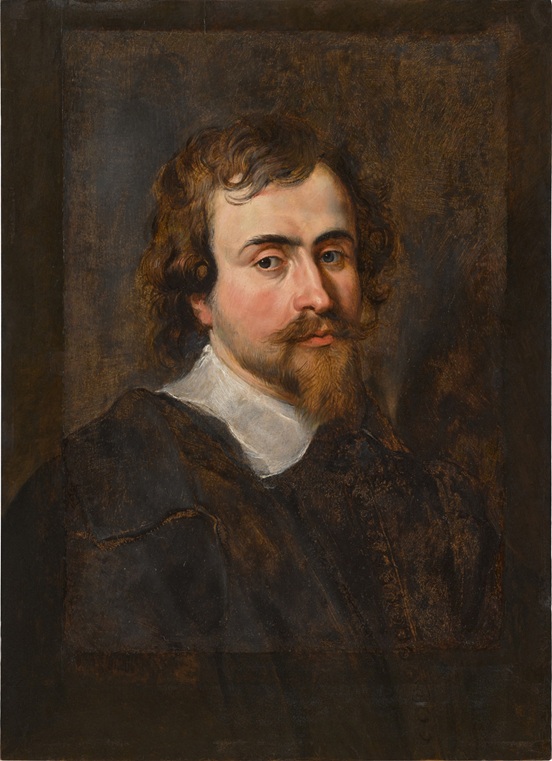
In June 2021, a seventeenth-century portrait of a man appeared at Uppsala Auktionskammare as a work from the circle of Anthony van Dyck, estimated at just €4,000-€6,000. The price climbed to €510,000. Three years later, the same panel was hanging at Sotheby’s New York as an early self-portrait by Peter Paul Rubens, with an estimate of $3-5 million. The history between those two auctions says much about connoisseurship and reattribution.
On 17 June 2021, a portrait of a man appeared in a Swedish auction catalogue as Circle of Anthony van Dyck, Portrait of a gentleman. Uppsala Auktionskammare had estimated the lot at SEK 40,000-60,000, approximately €4,000-€6,000.
That estimate was comfortably exceeded, as the price climbed to SEK 5.2 million, approximately €510,000. Among specialists, another name was already circulating, not Van Dyck, but the painter Peter Paul Rubens. The cataloguing was cautious and the estimate low, but before the hammer fell the market had already realised that something more interesting was being offered than had initially been expected.
A Rubens That Had Lost Its Name
On 1 February 2024, Sotheby’s New York presented the same painting as Sir Peter Paul Rubens, Self-Portrait of the Artist as a Young Man, dated circa 1610-11. The original panel measures 55.5 by 40 cm; later additions enlarged it to 68.2 by 49.4 cm. The estimate was $3-5 million.[1]
According to the provenance, the work remained in Rubens’ estate after his death and subsequently stayed within the family for several generations. When it was auctioned in Brussels in 1853, it was straightforwardly titled Portrait de Rubens. The recorded dimensions were 55 by 40.5 cm, almost exactly those of the original panel.[2]
By 1861, the identification had already become somewhat more cautious, at Hôtel Drouot it appeared as Portrait d’homme (Rubens lui-même?). By 1894, when it was with the Paris dealer Charles Sedelmeyer, Rubens was still considered the painter. But no longer the sitter, the work was now titled Portrait of the Artist’s Brother.
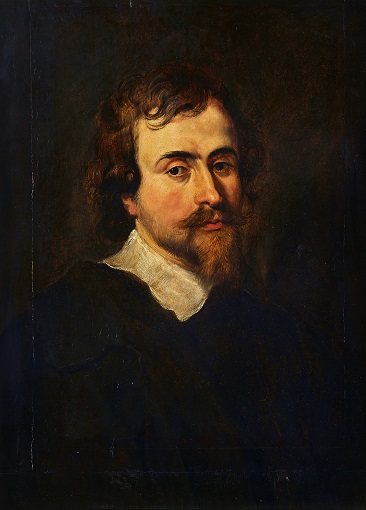
The painting subsequently made its way to Sweden, entering the collection of industrialist and collector Carl Robert Lamm at Näsby Castle. Lamm was one of the important Swedish collectors of his generation. When his collection came to auction in New York in 1923, the portrait was once again offered as an autograph work by Rubens, this time as Portrait of Philip Rubens. It realised $7,500.
By 1942 at the latest, the work belonged to the Swedish owner John Åke Truls Wiberg. It subsequently remained in the family. By the time it finally arrived at Uppsala Auktionskammare in 2021, its old identity as a Rubens had almost completely disappeared from view. From Rubens himself, to his brother, to an anonymous gentleman from the circle of Van Dyck. It was not so much the painting that had been lost, but its identity.
What the Bidders May Have Seen in 2021
This is not a portrait whose effect depends on costume, hands, attributes or status. Everything depends on the paint in the face. The viewer’s attention is concentrated almost entirely on the head. The face is carefully modelled, but the hair, moustache and beard are handled more freely. It is there that a sense of movement appears, contrasting with the dark clothing and background. The pale collar forms a sharp transition between head and body.
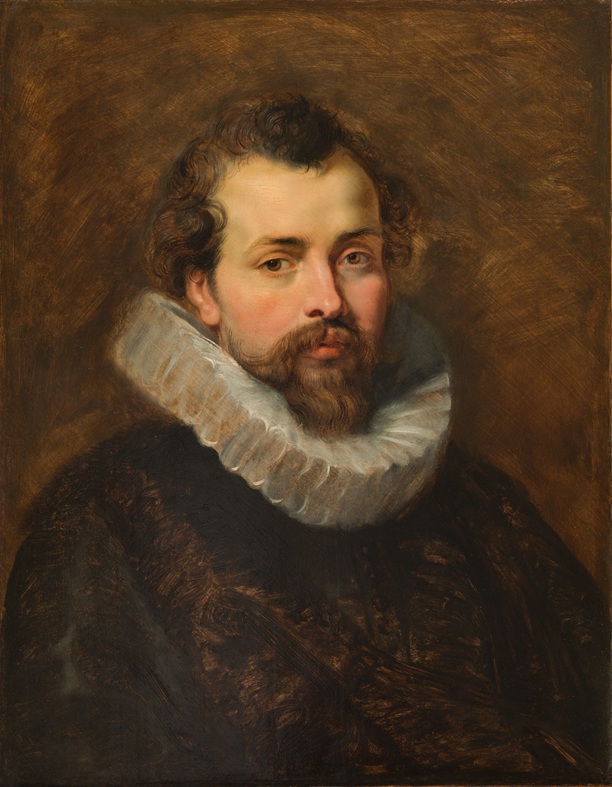
A particularly relevant comparison can be found at the Detroit Institute of Arts. Rubens’ Portrait of Philippe Rubens, the Artist’s Brother, likewise dated to circa 1610-11. Here too, a bearded man appears against a dark background, with the face treated in a much more refined and animated manner than the surrounding passages.[3]
Rubens Around 1610
The dating makes the painting much more interesting from an art-historical perspective than a random Rubens portrait. Rubens had returned to Antwerp in 1608 after spending roughly eight years in Italy. A year later he married Isabella Brant and became court painter to Archduke Albert and Archduchess Isabella. His career accelerated almost immediately.
At this time, Rubens did not present himself as a craftsman with brush and palette, but as a prosperous, humanistically educated gentleman. The expensive clothing and references to classical and humanist traditions form an explicit part of that carefully constructed self-image.[4] This Swedish portrait is much more intimate.
The two well-known independent self-portraits from 1623 are traditionally regarded as his earliest autonomous examples of the genre. Before then, Rubens included his own likeness in other compositions and family portraits.[5] An independent self-portrait from circa 1610-11 would therefore push that chronology considerably earlier.
From Swedish Sleeper to Major Auction Lot
At Uppsala, the painting had been just one lot in a Swedish auction, cautiously catalogued as Circle of Anthony van Dyck. At Sotheby’s in 2024, it received the full international Old Master treatment. A reconstructed provenance stretching back centuries, historic catalogue references, analysis of the support, comparative material and a place within Rubens’ early Antwerp period.
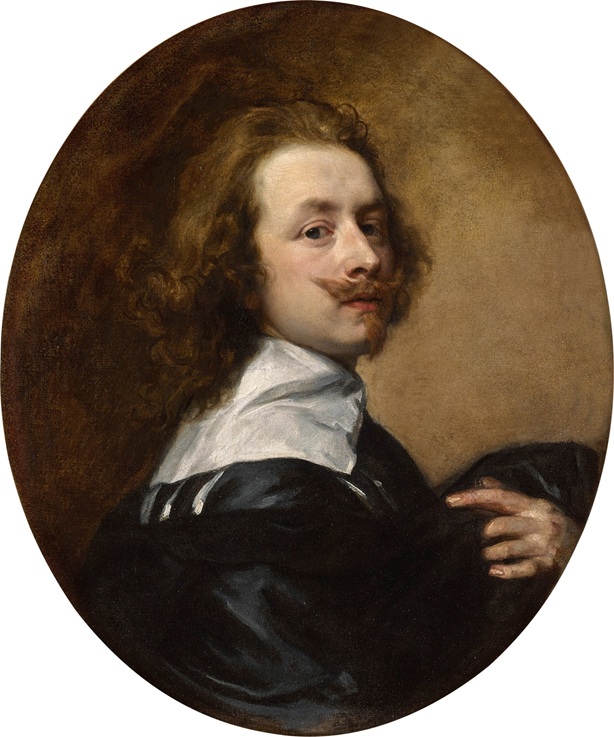
Even its position in the sale appeared carefully chosen. Rubens was lot 316, immediately afterwards came lot 317, a rediscovered self-portrait by his younger contemporary and former assistant Anthony van Dyck. It was estimated at $2-3 million. Sotheby’s even built a promotional Face Off: Rubens vs Van Dyck around the pair.[6]
The painting that just three years earlier had still belonged to the circle of Van Dyck in Sweden was now presented as a Rubens immediately before a self-portrait actually catalogued as Van Dyck.
Was $3-5 Million Unrealistic?
Rubens’ Portrait of a Venetian Nobleman sold at Sotheby’s London in 2018 for £5.4 million including buyer’s premium, against an estimate of £3-4 million.[7] The work was similar in size, but combined strong quality, good condition and a long-established place within the artist’s oeuvre.
In 2020, Portrait of a Young Woman, Half-Length, Holding a Chain, an early Italian portrait by Rubens, realised £4 million at Christie’s, against an estimate of £4-6 million.[8]
Those prices make a multi-million-dollar estimate for an accepted early self-portrait by Rubens not strange in itself. The Sotheby’s portrait had a conspicuous recent attribution history, a complex physical history because of the additions to the panel, and had traded publicly only three years earlier for half a million euros.
The Earlier Rubens Sleeper That Also Stumbled
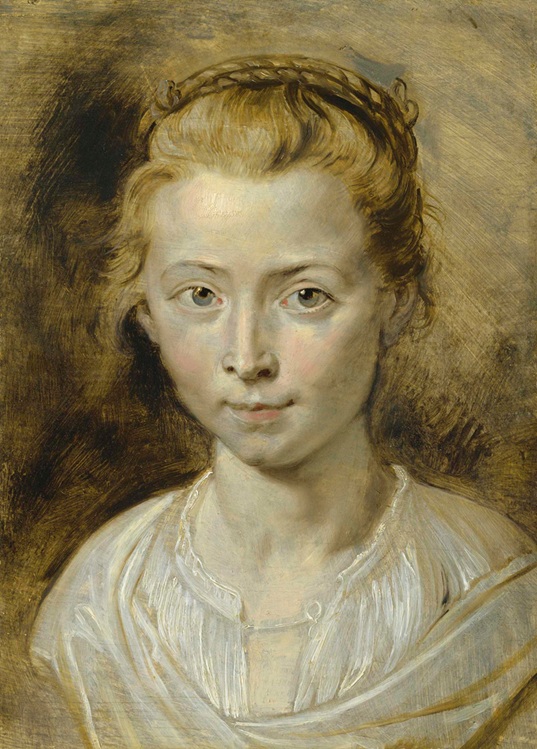
In 2013, Sotheby’s sold a small portrait of a girl from the collection of the Metropolitan Museum of Art as Follower of Rubens, possibly depicting Clara Serena Rubens. The estimate was just $20,000-30,000. Bidders did not believe the cataloguing and drove the price to $630,000 including buyer’s premium.
Following cleaning, technical examination and specialist reassessment, it was once again accepted as an autograph work by Rubens. Christie’s returned it to the market five years later as Portrait of Clara Serena Rubens, the Artist’s Daughter, now with an estimate of £3-5 million. It failed to sell.
The pattern bears a striking resemblance to the Swedish discovery. In both cases, the market already saw more in the work during its initial, cautious cataloguing than the auction house had recognised or had wanted to catalogue. Extensive research followed, and a “follower” or “circle” became Rubens. Yet at the subsequent sale, the transition from a ‘sleeper’ price to a fully priced Rubens proved far from automatic.
Was There No Immediate Interest or Was the Estimate Too High?
The painting was passed at $2.4 million, against an estimate of $3-5 million. The Van Dyck that immediately followed performed better and reached its low estimate. A reattribution can create enormous differences in value. But the Swedish bidders had already priced that possibility into the work in 2021. Three years later, Sotheby’s was no longer selling the discovery, but the fully developed conclusion.
And at a much higher price. That is precisely why, in our view, this lot deserves a throwback. An impressive historical dossier was reconstructed around the work, and it returned to the market as something far more ambitious. The discovery was good, and so was the revaluation, but unfortunately no buyer was found.
Do you have a particular interest in this artist or in this subject?
Do you follow this artist, or have you come across a work you would like to know more about? We regularly research works appearing on the market and are always happy to exchange views on quality, provenance, art-historical context and previous auction results. You can contact us directly via info@antonello.art.
Notes and Sources
[1] Sotheby’s, Master Paintings & Sculpture Part I, New York, 1 February 2024, lot 316, Sir Peter Paul Rubens, Self-Portrait of the Artist as a Young Man. Estimate $3-5 million.
[2] Sotheby’s, ibid. The provenance records Brussels, Etienne le Roy, 6 October 1853, lot 25, as Peter Paul Rubens, Portrait de Rubens, measuring 55 × 40.5 cm.
[3] Peter Paul Rubens, Portrait of Philippe Rubens, the Artist’s Brother, circa 1610-11, oil on oak panel, 68.5 × 53.5 cm, Detroit Institute of Arts.
[4] Bayerische Staatsgemäldesammlungen, Alte Pinakothek, Peter Paul Rubens, Rubens and Isabella Brant in the Honeysuckle Bower, circa 1609-10.
[5] National Gallery of Australia, Rubens’ Self-Portrait in Focus, 1988.
[6] Sotheby’s, Master Paintings & Sculpture Part I, New York, 1 February 2024, lots 316–317; Sotheby’s, “Face Off: Rubens vs Van Dyck”, January 2024.
[7] Sotheby’s, Old Masters Evening Sale, London, 4 July 2018, lot 17, Sir Peter Paul Rubens, Portrait of a Venetian Nobleman. Realised £5.4 million.
[8] Christie’s, Classic Art Evening Sale: Antiquity to 20th Century, London, 29 July 2020, lot 8, Sir Peter Paul Rubens, Portrait of a Young Woman, Half-Length, Holding a Chain. Approximately £4,000,000.